Appearance
Rock CycleScience Fair 2026
by Carissa
by Carissa
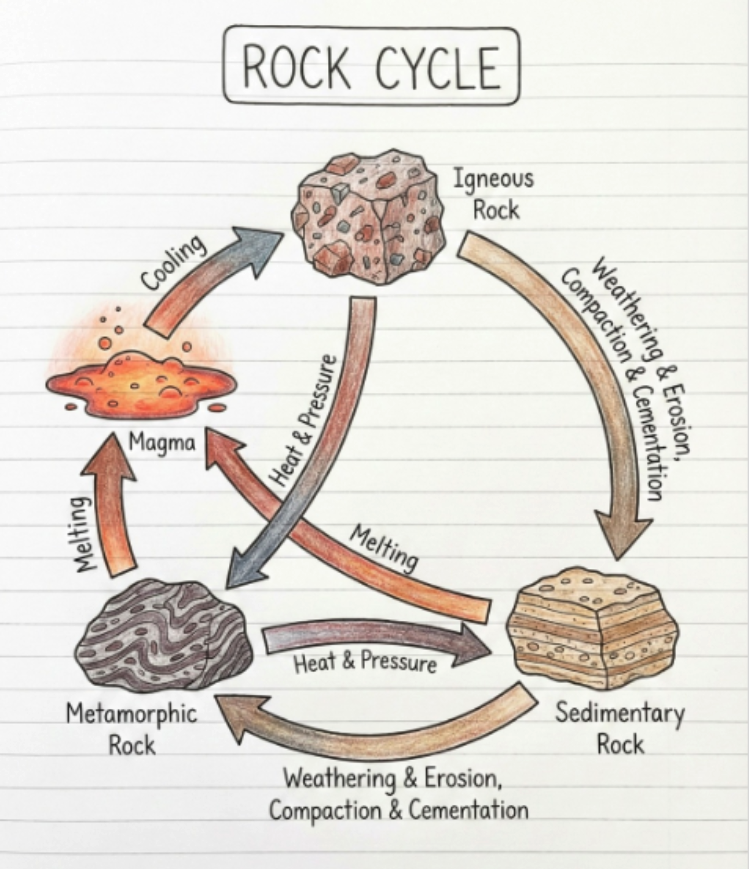
If rocks go through heat, pressure, and erosion, then they can change into different types of rocks because these forces break them down and form them into new rocks over time.
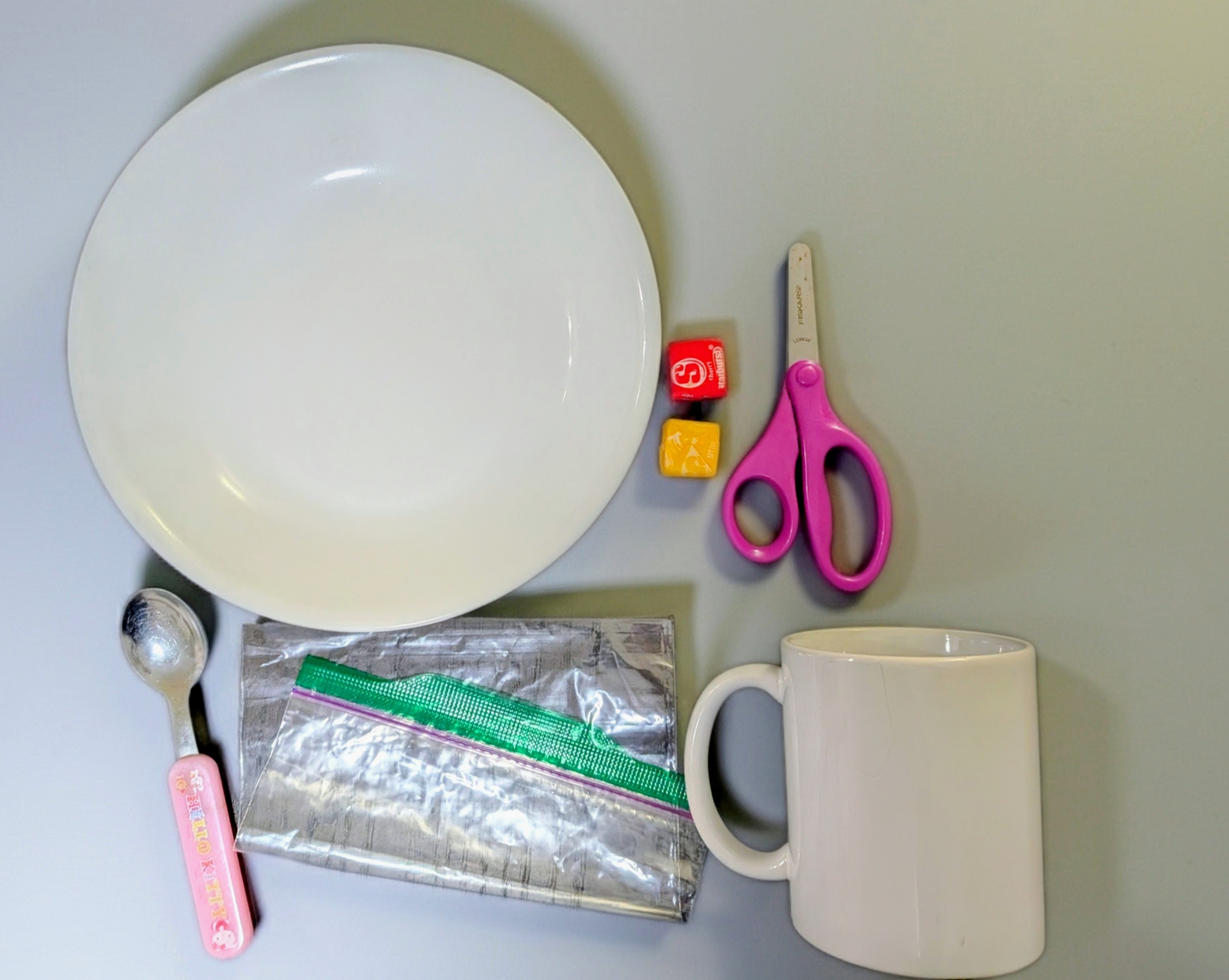
Use normal-sized Starbursts, carefully cut each one in half, then in half again, making four roughly equal pieces. Place about 8 small pieces of candy on a large plate
Take 8 pieces of Starburst candy. Stack 4 pieces on top of each other, then repeat with the remaining 4 pieces. Gently press or squish the stacks together.
Place 8 pieces of Starburst candy into a Ziplock bag. Put hot water in a cup. Put the Ziplock with your Starburst in the cup for 5 minutes Take the Starburst out of the bag and put it in a plate
Get the bowl with the Starburst then put it in the microwave for 10 seconds. After that squish it hard with your plate.
The experiment shows that my hypothesis was correct. Rocks can change into different types when they go through heat, pressure, and erosion. When I cut the Starbursts into small pieces, it showed how rocks can break into tiny parts. When I stacked and pressed them, it showed how sedimentary rocks are made. When I heated the candy in hot water, it showed how rocks can melt and form igneous rocks. When I microwaved and squished them, it showed how heat and pressure can change rocks into metamorphic rocks. This experiment helped me see that rocks can change over time and do not stay the same.
Igneous rocks are found globally around the world. These rocks start to form in the deep hot lava or magma inside Earth near plate boundaries, hot spots, and volcanic areas Where magma rises from the crust or upper mantle during the volcano eruption, the lava will eventually cool down and become an igneous rock.
Sedimentary rocks are mostly found near riverbanks, flood plains, coastal plains, and ocean basins forming visual layers like in the Grand Canyon. This rock is formed from sediments (broken pieces from igneous rocks) that are blown into a water source and gets glued together by minerals mixed in the water that is one way they form.
Metamorphic rocks are formed when existing rock is changed into a metamorphic rock by intense heat and high pressure deep inside Earth with magma, but the rock doesn't melt. That is how a metamorphic rock formed.
Erosion: the gradual breaking down of rocks and other natural substances by water
Pressure: the force or push on something
Rock: solid and natural material that is made by 2 plus minerals
Geologist: the person who studies rocks
Magma: hot liquid on Earth.